Piano Guides
Exploring Apollo Pianos: Brand History and Sound Characteristics

Nov
A customer sits down at an Apollo upright in our showroom and asks the only question that actually matters: how does it sound? Apollo is one of the brands in the piano listings we carry, and it is a fair place to start any conversation about a used piano’s real sound characteristics, once you set the name itself aside for a minute.
That is the whole subject here. Not where the Apollo name came from, which turns out to be a messier question than it looks, but how to actually listen for an Apollo piano’s sound characteristics the same careful way a technician would, so the decision rests on the instrument in front of you.
What actually shapes how a piano sounds
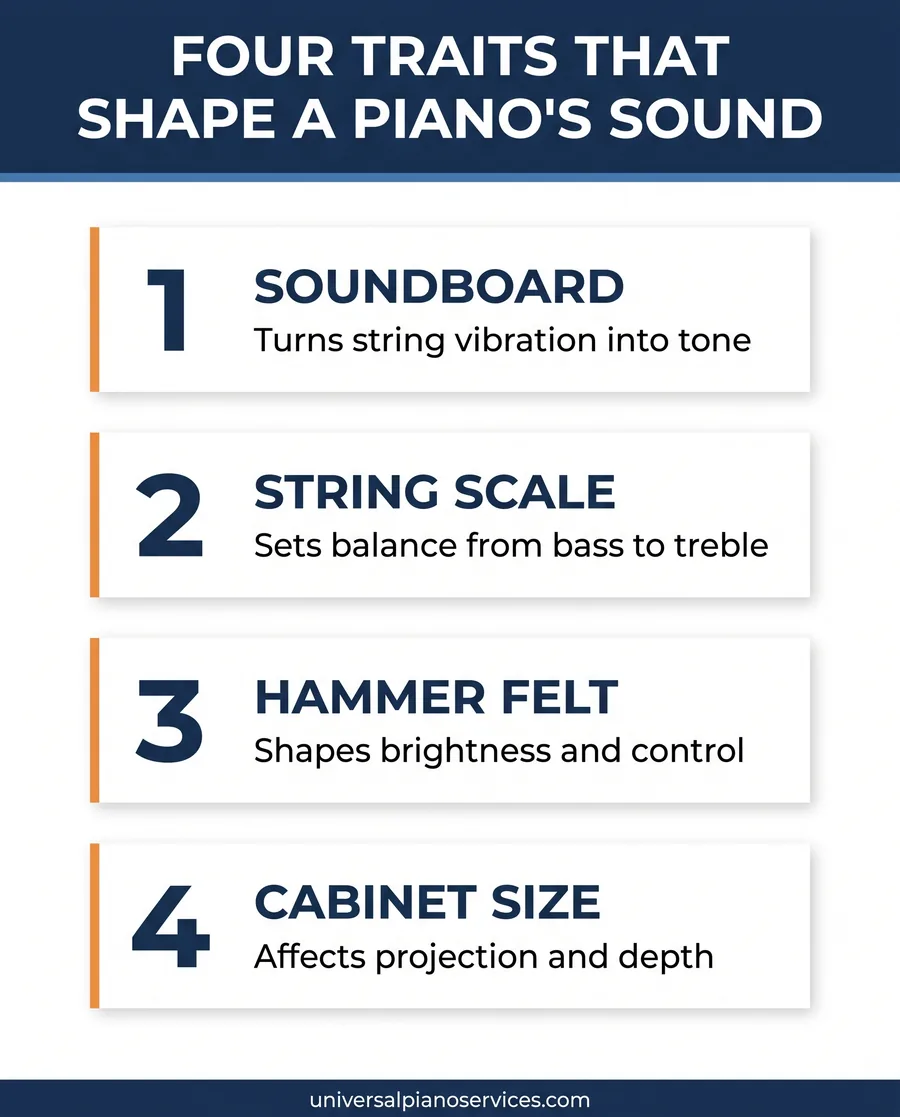
Every piano, Apollo included, gets its voice from the same short list of parts, built the same way regardless of what is stencilled on the fallboard. Learning to read those parts is what turns a showroom visit from guesswork into an actual evaluation.
Soundboard size and crown
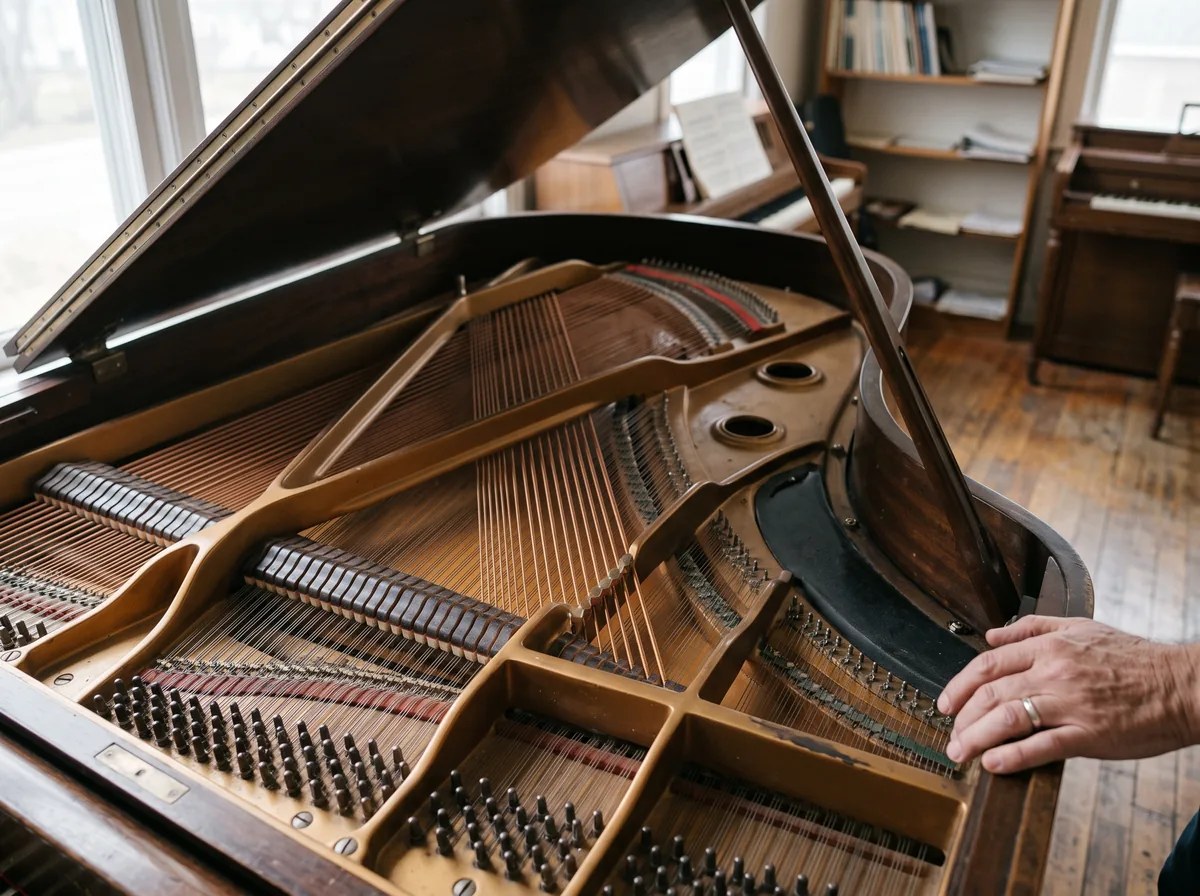
The soundboard is the thin wooden panel under the strings that turns vibration into the sound you hear across the room. A healthy board holds a slight upward arch called crown, which keeps even pressure on the strings and gives the tone its fullness. A flattened or heavily cracked board will thin out a piano’s voice no matter how well known the maker is.
String scale and bridge placement
The scale is the layout of string lengths and thicknesses across the keyboard, and where each string crosses the bridge decides how cleanly its energy transfers into the soundboard. A well designed scale sounds even from the lowest bass note to the highest treble note. An uneven scale can leave a piano with a warm bass and a thin, disconnected top end, a mismatch you can hear in minutes once you know to listen for it.
Hammer felt and voicing
Hammers are the felt covered heads that strike the strings, and how dense or worn that felt is changes the character of every note. Fresh, evenly voiced felt gives a rounder tone with more control between soft and loud playing. Hardened or grooved felt pushes a piano toward a brighter, sometimes harsher sound that a routine tuning alone will not soften, since voicing is a separate step from pitch.
Cabinet size and projection
A taller upright generally has room for a larger soundboard and longer bass strings than a shorter one, which commonly gives it more depth and volume in the low register. That is a design consequence of size, not a brand-specific trait, and it applies the same way to an Apollo cabinet as it does to any other manufacturer’s upright of similar height.
What the record says about the Apollo name, honestly
Here is where we could tell you a tidy founding story, and we are not going to. Searching the usual piano history references turns up more than one Apollo, tied to different decades and different countries, sourced mostly to dealer write-ups and forum threads that repeat each other rather than a single documented origin. None of those sources meets the bar we hold ourselves to before printing a date, a founder or a factory location, so we are not going to guess which Apollo story belongs to the piano in front of you.
Did you know
The piano trade has used an enormous number of brand names over the past century, many of them chosen by a retailer rather than the workshop that built the instrument. The Pierce Piano Atlas, the standard reference technicians use to research piano names, documents more than twelve thousand of them, which gives you a sense of how ordinary a thinly recorded name like Apollo actually is.
None of that is a knock on the piano itself. A name with a tangled or undocumented past tells you nothing about how well the instrument was built or how it sounds today. It just means the fallboard cannot answer the sound question for you, so the next section walks through how to answer it yourself.
How to listen for an Apollo piano’s sound characteristics
This is where an Apollo piano’s sound characteristics actually get decided, note by note, rather than by anything printed on the case. The same listening routine works whether you are trying an Apollo, a familiar name, or something in between.
Tone across the registers
Play a slow chromatic scale from the bottom of the keyboard to the top, and listen for how connected the sound stays as you move through it. An Apollo piano’s sound characteristics can vary meaningfully bench to bench, so this is a check you do on the specific instrument, not something you assume from the name. A well balanced piano keeps a similar character moving through the bass, middle and treble. A break in that character, usually right around where the bass strings end, points to a scale or soundboard issue worth asking a technician about.
Sustain and dynamic range
Hold down a single note softly, then again with more force, and listen to how long each one rings before it fades. A healthy piano should offer a real spread between its softest and loudest playing, not just a louder version of the same flat sound. Short, choked sustain across most of the keyboard is usually a soundboard or bridge problem rather than something specific to an unfamiliar brand.
People often ask
Does a piano only being sold through a few dealers mean it is a budget instrument? Not necessarily. How widely a brand is distributed is a business decision, separate from how the piano was actually built. Judge distribution and build quality as two different questions, and let your ears settle the second one.
Touch and action feel
Play the same short passage at different volumes and pay attention to how the keys respond under your fingers, not just what you hear. Keys that feel even in weight and return promptly point to an action in good regulation. A sticky key, an uneven section, or keys that feel noticeably heavier on one side of the keyboard usually means the action needs attention, something our regular maintenance guide covers alongside the basics of keeping any piano in good playing condition.
Comparing an unfamiliar name against a familiar one
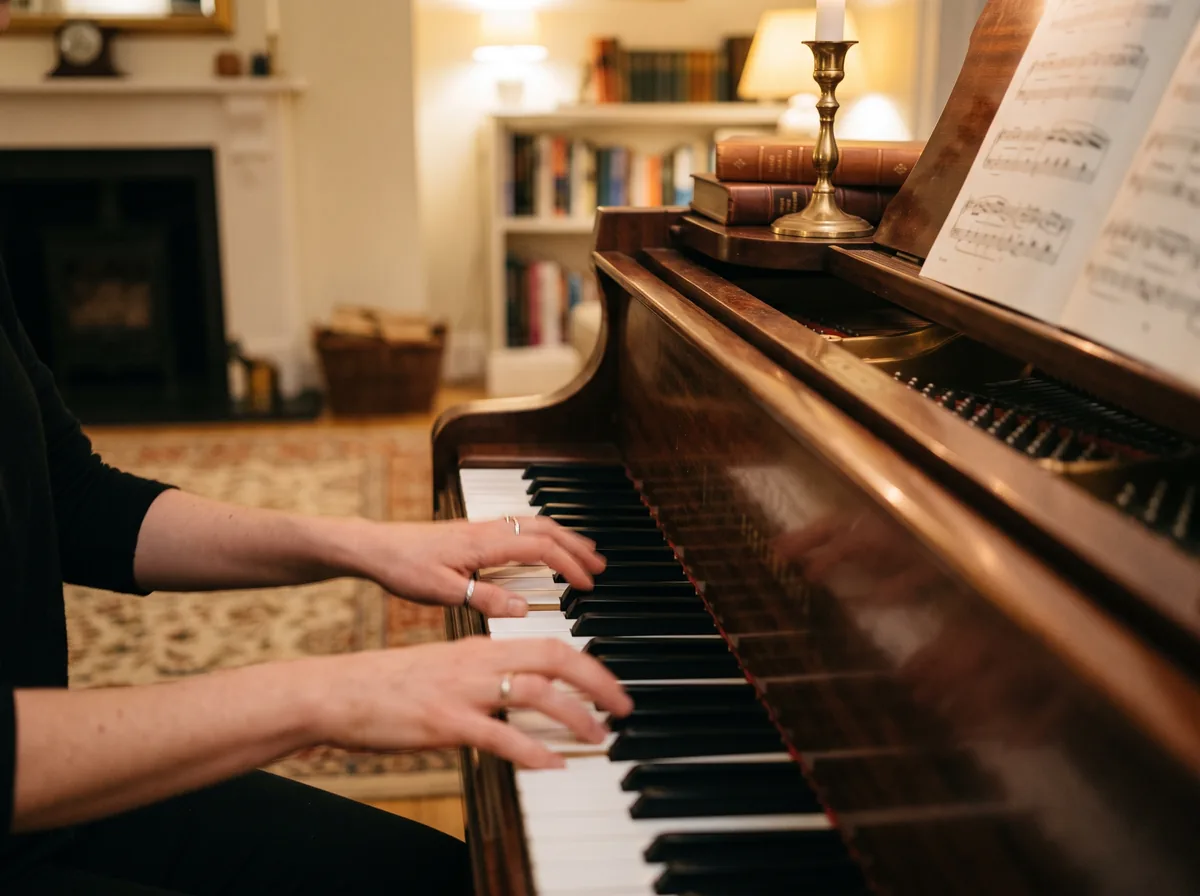
It helps to hear an Apollo piano’s sound characteristics side by side with something you already know, the way you might compare a Kawai upright against it in the same room. Play the identical passage on both, back to back, and try to describe the difference in plain words rather than reaching for a verdict right away: brighter or warmer, more sustain or less, an even scale or a break somewhere in the middle.
Once you can describe what you are hearing, the name on the fallboard stops mattering nearly as much as people expect. Our general piano buying guide walks through the rest of the comparison shopping process if you are weighing more than one instrument at a time.
Good to know
This guide describes general acoustic principles to help you listen more closely to any piano, including an Apollo. It is not an appraisal, a valuation or a substitute for a hands on inspection. Tone, condition and playability vary by instrument, and any specific brand history should be confirmed by a qualified technician rather than assumed from this article. Universal Piano Services is not responsible for decisions made solely on the information here.
When a professional evaluation is worth booking
Everything above will get you a genuinely informed first listen. It will not replace a trained ear checking pinblock tightness, hidden soundboard cracks or action wear that are easy to miss from the bench, particularly on a name without a documented history to lean on.
If you are close to a decision on an Apollo piano, or any piano with a name you do not recognize, a professional piano appraisal turns a good first impression into a documented one.
Download the free quick guide
A printable listening routine covering every checkpoint in this guide, for any piano viewing regardless of the name on it.
Frequently asked questions
Is Apollo a real piano brand, or just a name?
Apollo is a genuine trade name that has turned up in the piano trade more than once, across different decades and, based on the sources available, possibly different manufacturers entirely. It shows up on our own list of carried brands as a real, sellable piano, but the historical record connecting those various uses of the name is thin and inconsistent. If you want the specific history behind a particular instrument, a technician’s hands on look at its serial number and construction will get you further than any name search.
Does an Apollo piano sound different from more familiar brands?
It can, but not because of the name itself. An Apollo piano’s sound characteristics come from the same handful of things that decide any piano’s voice: soundboard condition, string scale, hammer felt and how well the action is regulated. Two pianos with famous names can sound quite different from each other, and an Apollo can sound closer to one of them than the other. Listening is the only reliable way to compare, rather than assuming based on brand recognition.
Can I find out exactly when my Apollo piano was built?
Sometimes, and sometimes not. For manufacturers with a long, well documented public record, a serial number can often be matched against published ranges. For a name like Apollo, with more than one historical thread and no single confirmed registry, that same number may not resolve cleanly. An experienced technician looking at construction details alongside the serial number will generally get you closer to an estimate than the number alone.
Should I still get an appraisal on a piano with a less common name?
Yes, and arguably more so than with a famous name, since there is less public information to lean on beforehand. An appraisal gives you a documented, hands on assessment of the specific instrument rather than a guess based on the name, which matters just as much whether you are buying, selling or simply trying to understand what you already own.
What is the fastest way to judge a piano’s sound in a showroom?
Play the same short, simple passage on a few different pianos back to back, ideally including at least one familiar name for reference. Listen for how even the tone stays from bass to treble, how long notes sustain, and how the keys feel under your fingers at different volumes. Comparing instruments directly, rather than one at a time from memory, makes real differences in sound much easier to hear.
An unfamiliar name is a starting point, not a verdict. Spend real time on the soundboard, the scale and the action before you form an opinion, and let a trained technician settle anything your own ears cannot.
If you want to hear an Apollo piano’s sound characteristics for yourself, book a piano appraisal in the GTA and bring a familiar piece to play. We will bring out a few instruments and let your own ears do the comparing.