Piano Tips
Piano Moving Preparation Checklist: What GTA Homeowners Should Do Before the Movers Arrive
Apr
Last updated: April 21, 2026
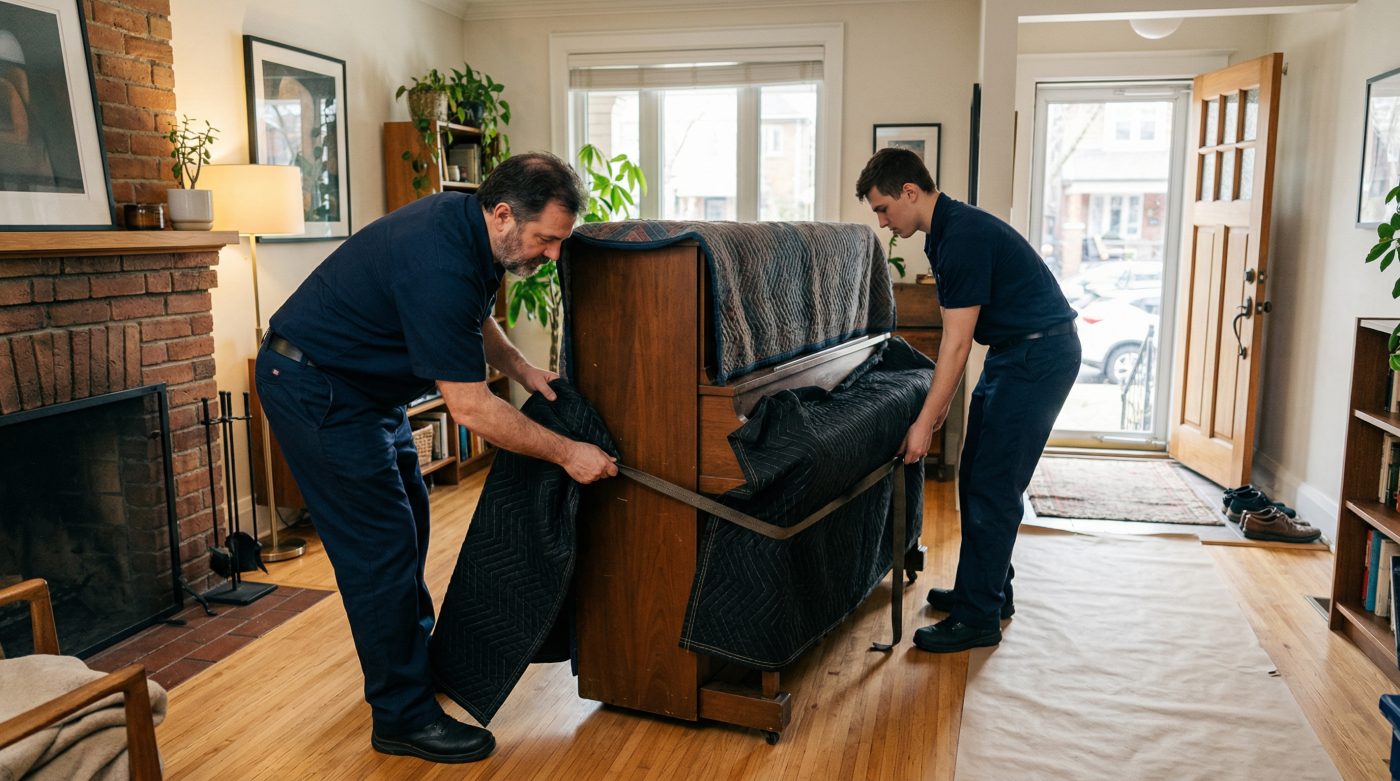
Most damaged pianos in the GTA are not damaged in the truck. They are damaged in the doorway, on the stairs, or on the homeowner’s hardwood floor in the first ninety seconds of the move. The good news is that almost all of those incidents are preventable, and most of the prevention happens before the moving crew rings the doorbell. If you have a piano moving service booked, here is exactly what to do in the days leading up to it.
One week before the move
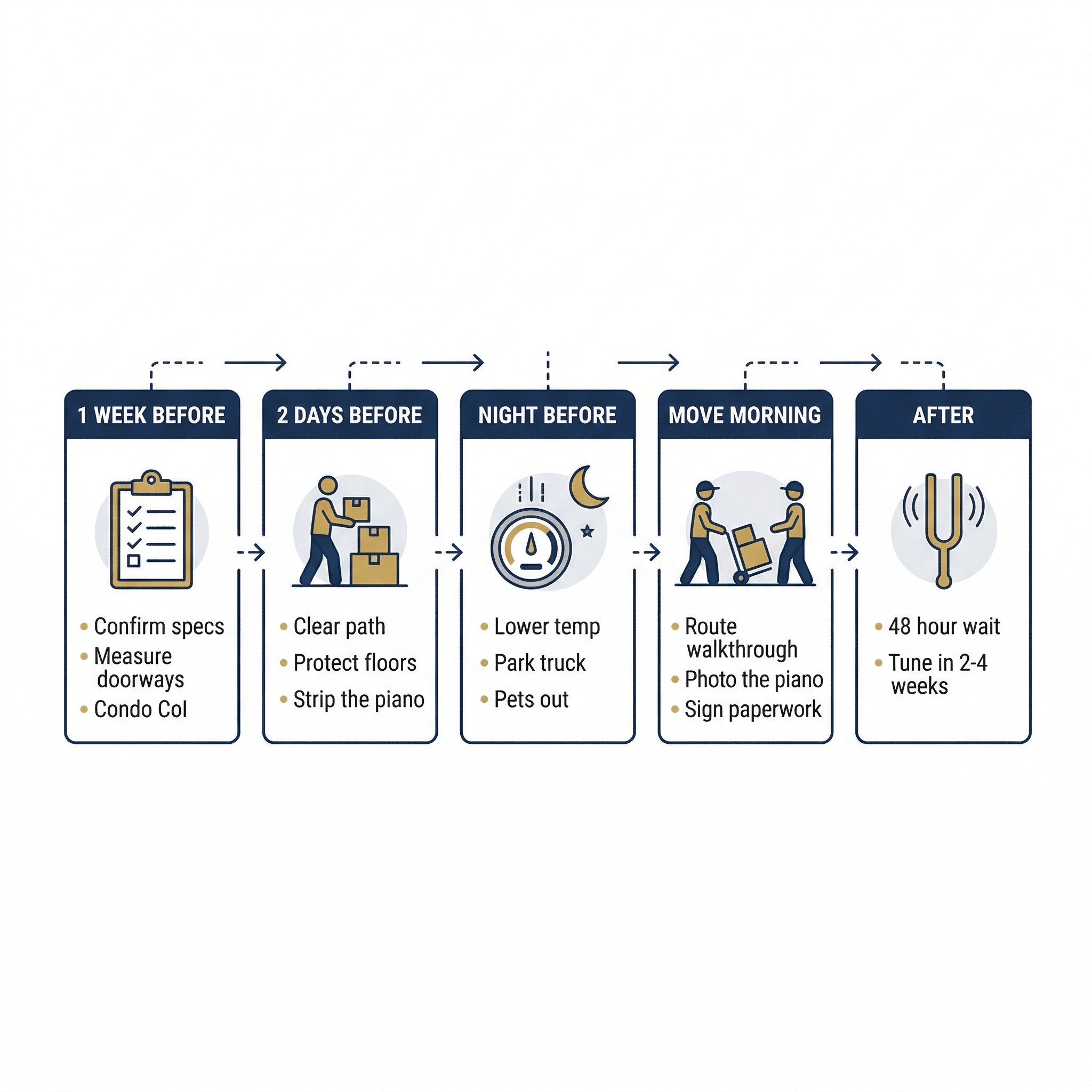
Confirm the piano specs in writing
The single most common reason a move goes sideways is that the crew shows up expecting a 48 inch upright and finds a 60 inch professional studio that weighs 250 kg more, or a 5’7″ baby grand that turns out to be a 6’10” semi-concert. Email your moving company the make, model, serial number (inside the lid on uprights, on the cast iron plate on grands), and approximate height or length. If you do not know, take a tape measure and a flashlight and find out. The crew will price and crew the job based on what you tell them, and a wrong spec almost always means the truck arrives short-handed or with the wrong dolly.
Photograph and measure every doorway, hallway, and stair on the path
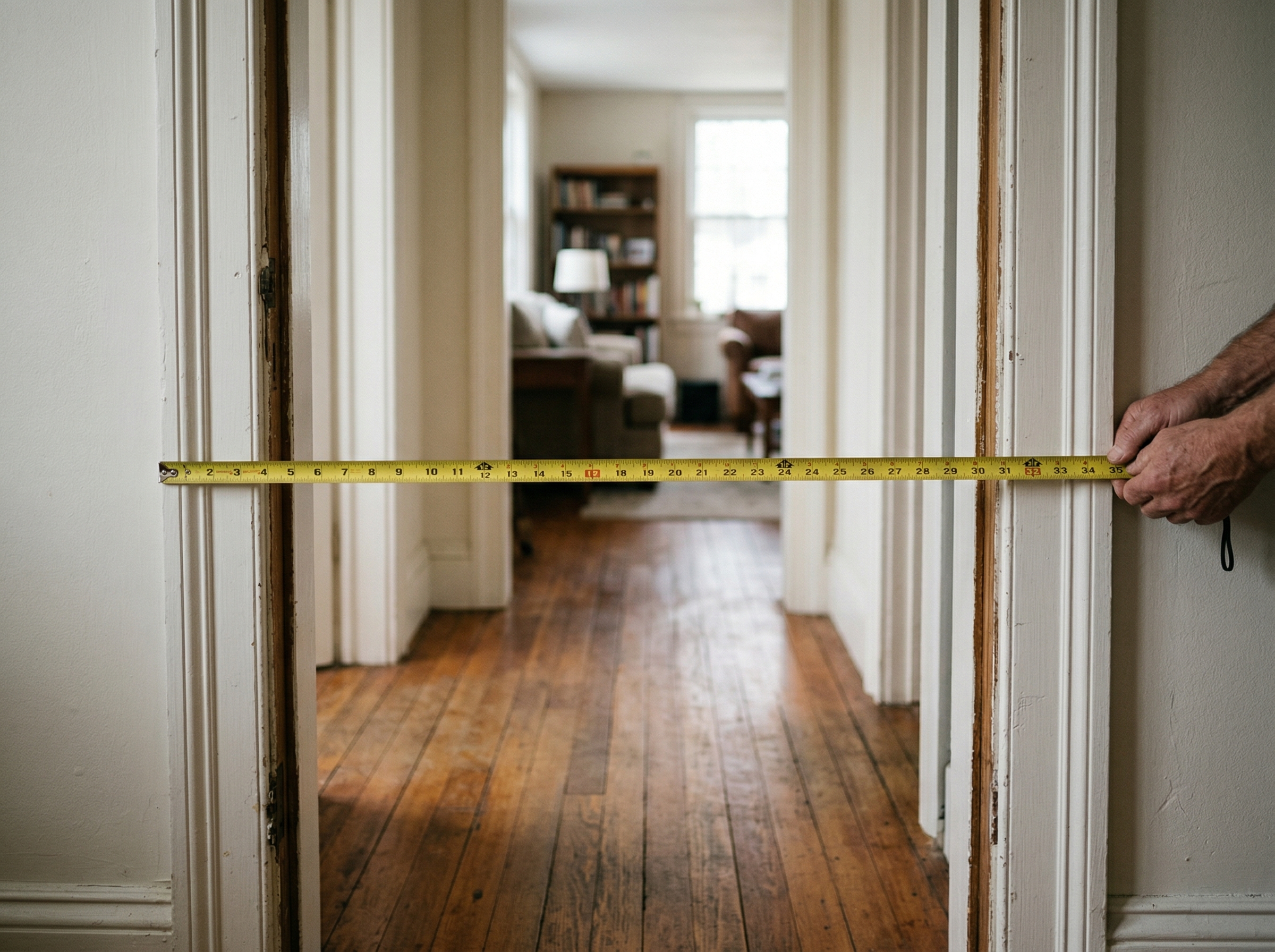
Walk the route from the piano’s current spot to the front door. Measure the narrowest point of every doorway (doors and frames), the width and turning radius at every corner, the headroom under any low ceiling or arch, and the riser height and width of every stair. Do the same on the other end at the destination. Email those measurements to your mover. A grand piano on a skid board needs 36 inches of clearance through doorways. A tall upright needs 28 inches minimum, and the tightest corner determines the entire route. The mover would rather know about a 27 inch front door before the truck leaves the yard.
Notify the building or condo board
If either origin or destination is a condo, townhouse complex, or apartment building, book the service elevator and any required certificate of insurance from the moving company at least seven days ahead. Most GTA condos require a CoI naming the corporation and the property manager as additional insureds, with $2 to $5 million in liability coverage. A reputable piano mover will email this to your property manager directly within 24 hours of the request.
Two days before
Clear the path completely
Move every piece of furniture, every rug, every floor lamp, and every umbrella stand off the route between the piano and the truck. Pay special attention to the corners, the bottom and top of any stairs, and the area immediately outside the front door. If the piano is in a furnished room, push the couch, coffee table, end tables, plants, and anything fragile against the wall opposite the piano. The crew needs at least 1.2 metres of working space all around the instrument.
Protect the floors yourself
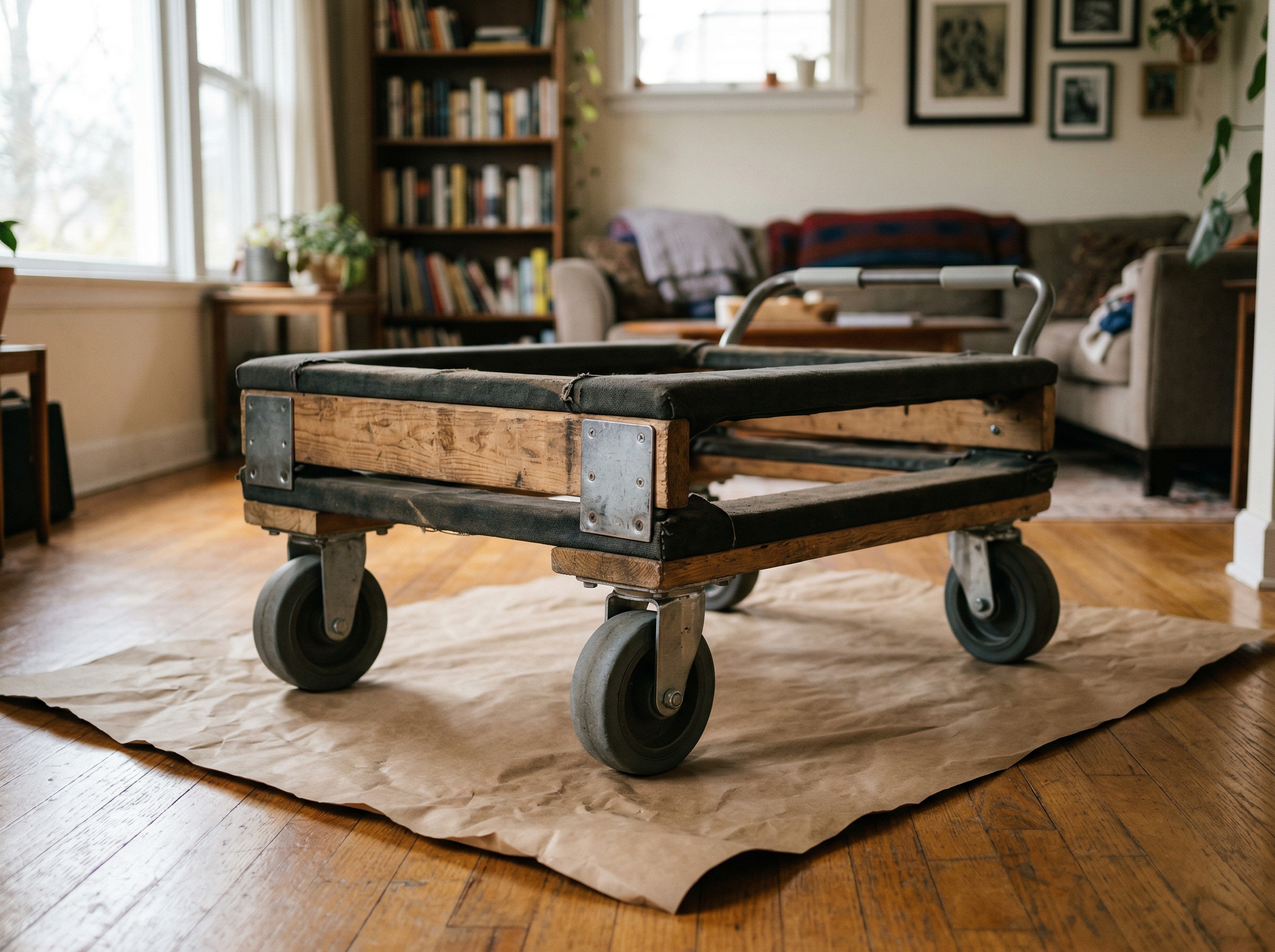
Reputable piano movers bring blankets, rug runners, and ramp boards, but the homeowner is responsible for the floors. If you have hardwood, lay down kraft paper, ram board, or cardboard on the route from the piano to the front door. If you have light coloured tile or polished concrete, the same. Do not use bedsheets or beach towels, they slide. Tape the corners of the protective material down with painter’s tape so it does not bunch under the dolly wheels.
Take everything off the piano
All the photos. The lamp. The metronome. The pile of sheet music. The cat. Any decorative items inside the lid of an upright or under the music desk of a grand. If you have a removable music desk, lift it out and pack it separately. If your piano has a removable lyre (the piece that holds the pedals on a grand), do not remove it yourself, the crew will. Lyres are notorious for being snapped during moves when the homeowner tries to help.
The night before
Climate adjustment
If the piano is moving from a heated home to a cold truck and back to a heated home, condensation is the enemy. On the night before the move, lower your home temperature to about 18°C and let the piano sit at that temperature overnight. After the move, let the piano sit untouched in its new location for 48 hours before you play it or have it tuned. This lets the wood and metal components equilibrate to the new room and prevents condensation from forming inside the case. If you can, ask the destination homeowner to do the same.
Park the truck
If you live on a busy GTA street, or in a townhouse with no driveway, reserve a parking spot for the moving truck the night before. In Toronto and Mississauga you can sometimes get a temporary no-parking permit from the city for moving day. At minimum, put two cones or trash cans in the space the night before so the truck has somewhere to back up to within 5 metres of the front door. Every additional 10 metres the crew has to roll the piano on a public sidewalk adds time and risk.
Pets and kids
Plan for the dog to be at daycare or the in-laws. Plan for the kids to be out of the house or supervised in a closed room. A piano move is fast, heavy, and moves through tight doorways. The crew needs the path clear and quiet.
Move day morning
Inspect with the lead mover
When the crew arrives, walk the route with the lead mover before any wrapping starts. Point out the spots you are worried about. Confirm where the truck is parked and where they will exit. Sign the bill of lading or work order before they touch the piano, not after.
Document the piano’s pre-move condition
Take 8 to 12 clear, well-lit photographs of the piano from every side, the lid, the legs, the music desk, the pedals, and any existing scratches or dings. Date stamp them in your phone camera settings. This is the only protection you have if a damage claim goes sideways.
Stay out of the work zone
Once the wrap goes on, stay out of the room. Watch from the next room or the front yard. The crew is moving 250 to 450 kg of cast iron, wood, and copper wire through your home. They need uninterrupted concentration. Ask any questions during the walkthrough, not during the lift.
After the move
Wait 48 hours, then book a tuning
A moved piano will be out of tune. Even a perfect 100 metre move down the same hallway changes the soundboard’s relationship to the temperature and humidity of the new spot. Wait at least two weeks (ideally three to four) for the piano to settle into the new room before booking a tuning. Tuning the same day as the move is a waste of money, the pitch will drift again as the wood adjusts. Book your follow-up piano tuning service for two to four weeks out.
Check the climate of the new room
Use the move as an opportunity to put a $20 hygrometer in the new room and log the humidity for two weeks. If the new spot is dramatically different from the old spot (basement vs main floor, sunroom vs interior room, condo vs house), you may need to adjust your humidity control before the piano starts complaining.
Frequently asked questions
How much does it cost to move a piano in the GTA in 2026?
An upright move within Toronto, ground floor to ground floor, runs $300 to $500. A grand piano move is $500 to $1,000 depending on size. Stairs add $100 to $200 per flight. Long distance moves (Toronto to Ottawa, for example) start at $800 and climb fast. Condo moves with elevator booking add $50 to $100 in admin time.
Can I move a piano myself with friends?
You can. People do it every weekend. About one in ten of those DIY moves results in a damaged piano, a damaged floor, a damaged wall, or a damaged person. A 48 inch upright weighs 220 to 280 kg and the centre of gravity is high. A grand piano is even worse because the legs come off and the case has to ride on a skid. Pianos do not bounce when you drop them, they crack. The cost of a professional move is almost always less than the repair cost of one DIY mistake.
Should I tip the piano movers?
Optional but appreciated. $20 to $40 per crew member for a routine move, more for a difficult stair job or a long carry, is the GTA norm. Cash at the end of the move.
Do I need to pad and wrap the piano myself?
No. Reputable piano movers bring their own moving blankets, stretch wrap, and skid boards. Do not put your own blankets on the piano, the crew has to take them off and rewrap with their own gear, which wastes time.
What time of year is best to move a piano?
Late spring and early fall, when outdoor temperatures are moderate and humidity is stable. Winter moves are doable but you have to plan for condensation. Summer moves on a 32°C day are hard on the crew and the piano. Avoid moving on the worst weather days if you have flexibility.
Can a piano be stored temporarily during a move?
Yes. Most piano movers offer climate-controlled short term storage at $50 to $150 per month depending on size. Climate control is non-negotiable, regular self-storage units in the GTA hit 35°C in summer and -10°C in winter, which is brutal on the instrument.
Get a quote with a route walkthrough
Universal Piano Services has been moving uprights, grands, and concert instruments across the GTA for over 40 years, and our crews come out to assess the route in advance for any non-trivial move. request a quote and we will get you a written estimate, a CoI for your condo board, and a prep checklist for your specific instrument.