Piano Tips
Where to Put a Piano: The Best & Worst Room Placement Guide
Apr
Bringing an acoustic piano into your home is an exciting investment, but deciding exactly where it should live involves much more than just interior design. Because an acoustic piano is primarily crafted from thousands of pieces of living wood, it reacts violently to environmental changes.
Before you worry about tuning, the most critical decision you will make is room placement. Placing your instrument in the wrong spot can lead to irreversible soundboard cracks and sticky keys. Here is your ultimate guide to finding the safest spot for your piano.
The Golden Rule of Piano Placement: Stability
An acoustic piano craves a boring, stable environment. The wood expands and contracts based on temperature fluctuations and drafts. Your goal is to find a location in your home where the temperature and air flow remain as constant as possible throughout the day and night.
The Worst Places to Put a Piano
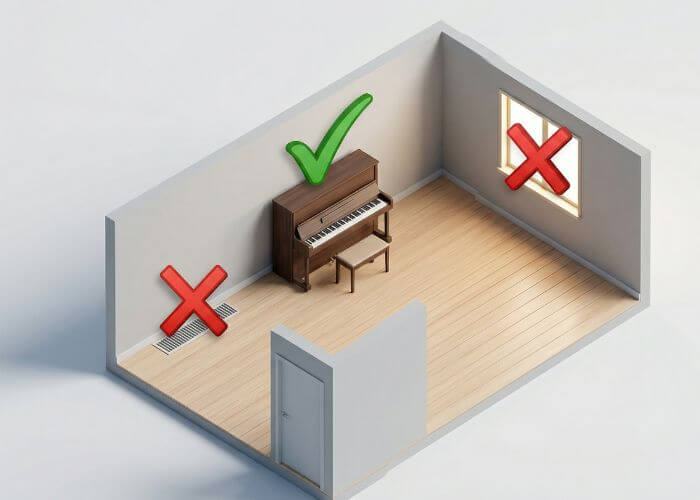
Room placement is half the battle. If your piano sits in a dangerous spot, the winter heating cycle and summer sun will destroy the tuning tension. Avoid these highly damaging areas at all costs:
- Directly Next to Heating Vents or Radiators: Forced-air heating rapidly strips moisture from the wood, shrinking the soundboard. A piano should never be within 10 feet of a direct heat source.
- In Direct Sunlight: UV rays will not only fade and ruin your piano’s beautiful finish but will also unevenly heat the soundboard, causing it to warp. Keep your piano away from unshaded, south-facing windows.
- Against Drafty Exterior Walls: In older homes with poor insulation, exterior walls fluctuate wildly in temperature between day and night. (Note: If your home was built recently with modern insulation, an exterior wall is much safer than it used to be, but interior walls are still preferred).
- Near Wood-Burning Stoves or Fireplaces: These create extreme, localized dry heat that will pull your metal strings completely out of tune within days.
The Ideal Spot for Your Acoustic Piano
The safest place for your piano is against an interior wall, away from direct sunlight, doors that open to the outside, and HVAC vents. This central location acts as a buffer, shielding the instrument from the extreme temperature swings of Canadian winters and humid summers.
What If You Have No Choice? (The Humidity Solution)
We understand that not every home has the perfect, vent-free interior wall. If you are forced to place your piano in a less-than-ideal location, you must actively manage the air around it to prevent the wood from cracking.
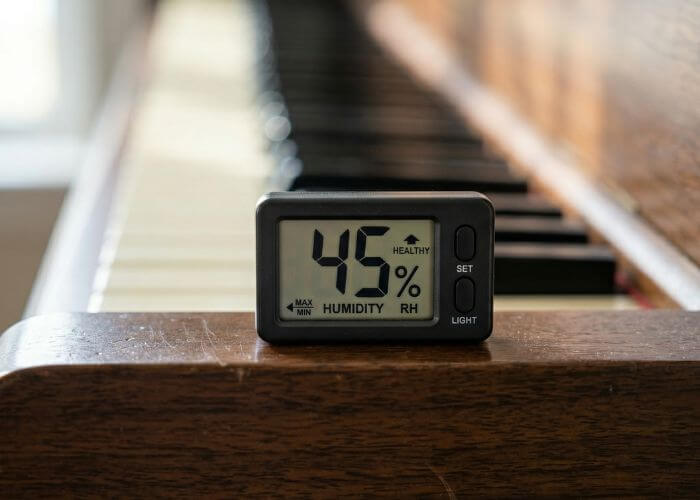
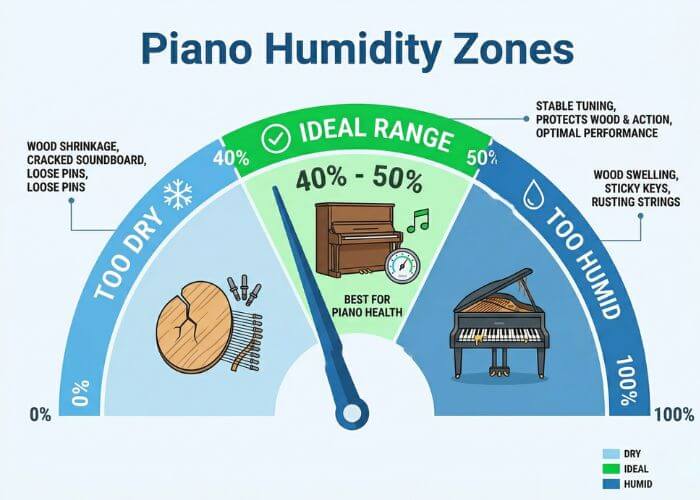
Your first step is to buy a $20 digital hygrometer to monitor the air. Your piano strictly requires an environment between 40% and 50% relative humidity. If your placement causes the air to drop below this, you need to intervene.
To learn exactly how to combat these environmental issues—including whole-house humidifiers and under-piano Dampp-Chaser systems—check out our comprehensive guide: Piano Humidity Control in GTA Winters: How to Stop Cracks, Drift, and Sticky Keys.
Keep Your Investment Tuned
Even with perfect placement, wood naturally shifts as the seasons change in Toronto. Booking a visit with our Toronto piano tuning professionals is the smartest way to protect your acoustic piano. If you notice sticky keys, rattling noises, or severe tuning drops, check out our comprehensive piano care services today.