Buying and Selling, Piano Guides
Eterna Piano Evaluation: A Look at the Yamaha Connection
Aug
If you have come across an Eterna piano and cannot find much written about the name, here is the short version: an Eterna piano is, in almost every case, a Yamaha. Eterna was the more affordable line that Yamaha built and sold for decades, which is why so many turn up today among the used pianos in Toronto and across the GTA. Understanding that connection tells you most of what you need to know about how one was built and how it should play.
The name on the fallboard is only the beginning of the story. What matters when you are looking at one of these instruments is where it was made, what condition it is in now, and whether it has been cared for. Below is how to read an Eterna properly, what to check before you commit, and how to keep one sounding its best.
In this article
What an eterna piano actually is
Eterna was a secondary brand from Yamaha, positioned below the pianos that carried the full Yamaha name. Think of it the way a carmaker sells a value model alongside its flagship. The goal was a dependable, well-made instrument at a gentler price, aimed at families, schools, and students rather than the concert stage.
Because Yamaha stood behind them, most Eterna uprights and grands share the same engineering discipline that made the parent brand a household name. The materials and finish were often simpler, and the very top-tier refinements were reserved for the flagship line, but the fundamentals were sound. An Eterna was never meant to be a throwaway piano, and a well-kept one can still be a genuinely satisfying instrument to play.
Quick take
An Eterna is Yamaha’s value line, built with the same core engineering as the flagship pianos but finished more simply. A well-maintained example is a reliable, musical instrument, not a compromise you have to apologize for.
How to confirm the Yamaha connection
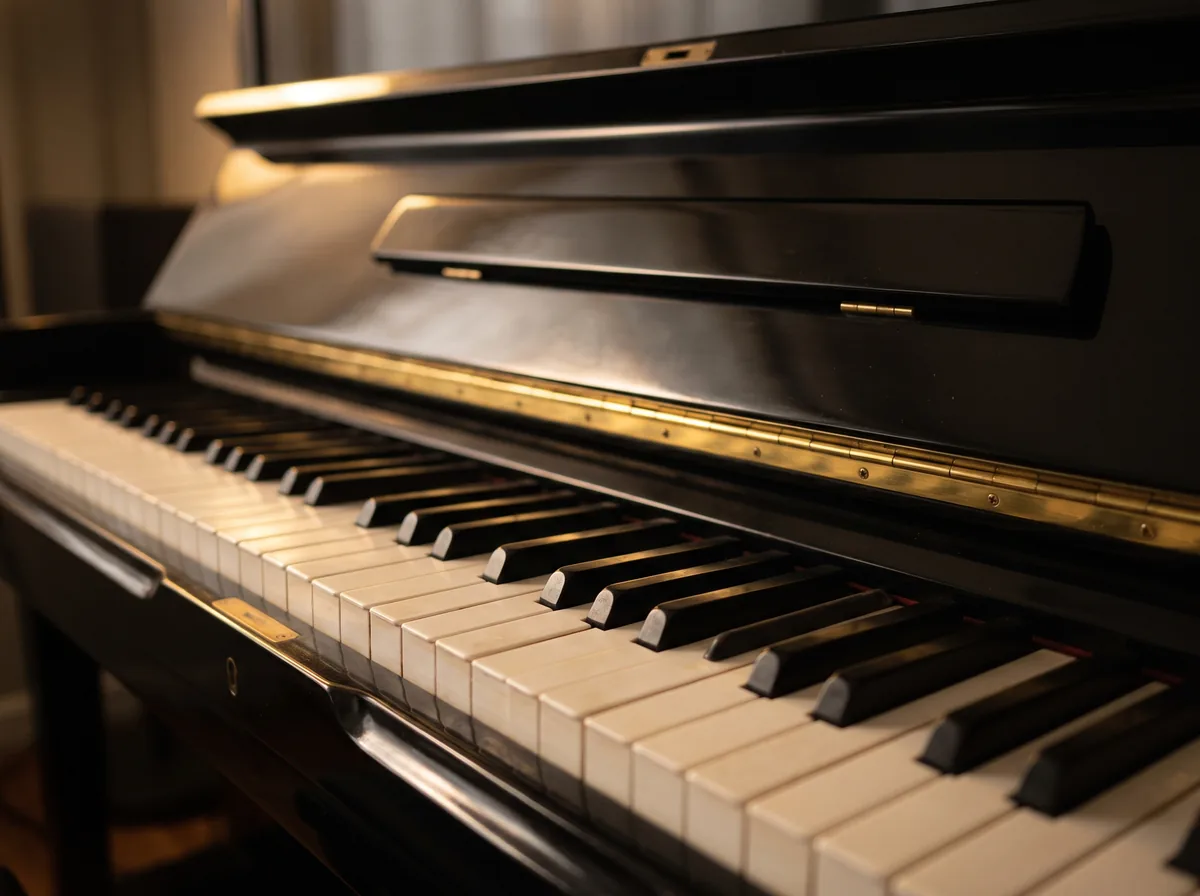
You do not have to take a seller’s word for the lineage. A few checks confirm whether the Eterna in front of you came out of the Yamaha family, and roughly when.
- Look at the fallboard and the plate. Many of these instruments read as an Eterna made by Yamaha, and the cast iron plate inside often carries Yamaha markings.
- Find the serial number. It is usually stamped near the tuning pins or on the plate. Yamaha serial records can date the instrument and tell you where it was built.
- Note the country of manufacture. Earlier examples were made in Japan, while later ones came from other Yamaha plants. Build location affects the parts and the era of construction.
- Compare the action and hardware. The keys, hammers, and pedals tend to mirror Yamaha designs of the same period, another sign the pedigree is genuine.
If you want to place a serial number in context, Yamaha publishes background on its acoustic piano range and history, and the broader story of the company on its corporate history page helps explain why a value brand like Eterna existed. For the pianos still carrying the parent name, our overview of our selection of used Yamaha pianos is a useful comparison point.
Did you know
Yamaha used more than one budget name over the years, and Eterna is among the most common you will meet in Canada. Because these pianos were sold in large numbers to schools and homes, they turn up regularly on the used market, which is good news if you want Yamaha engineering without a flagship price.
What to check before you buy a used one
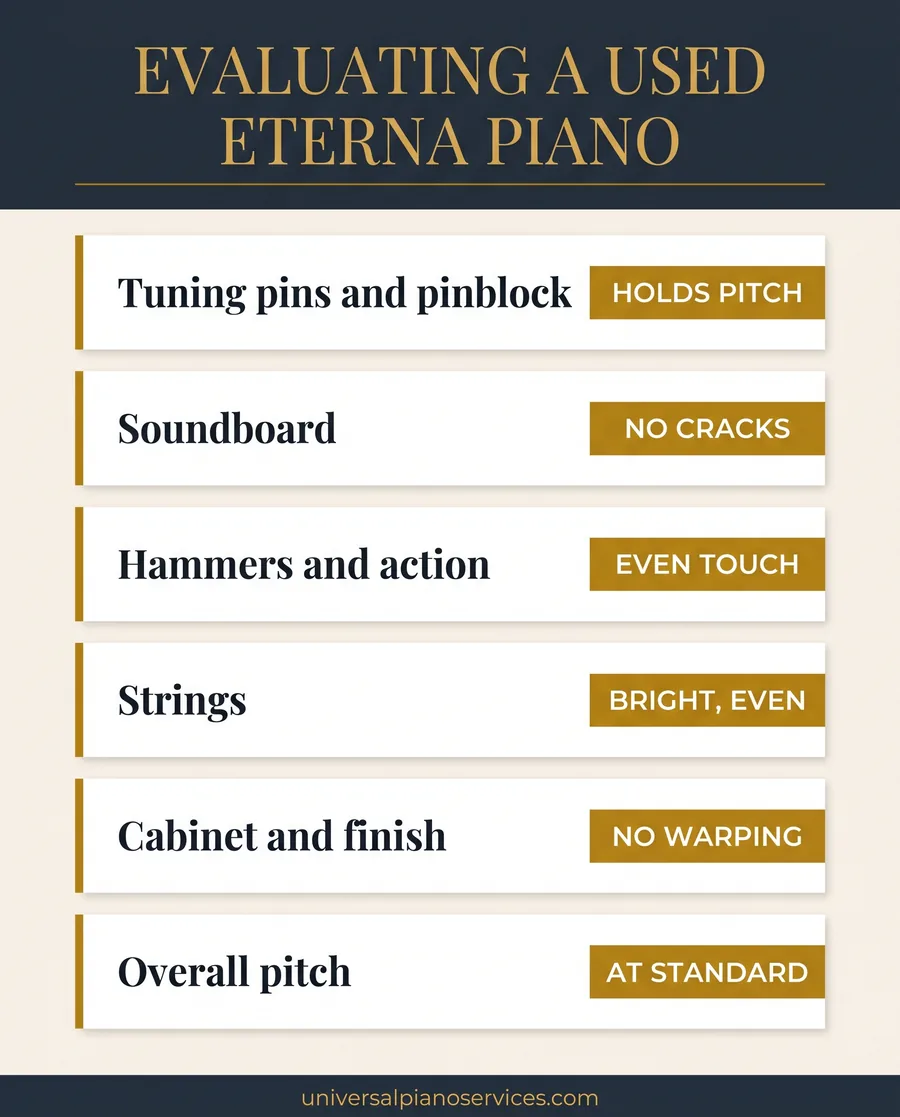
Age matters more than the name badge. A well-kept 1970s Eterna can outplay a neglected newer piano of any make. Before you buy, work through the same points a technician would, and if you can, bring one along or arrange a professional appraisal through a shop that offers professional piano appraisals.
| What to check | Why it matters | What good looks like |
|---|---|---|
| Tuning pins and pinblock | Loose pins mean the piano will not hold a tune | Firm pins, holds pitch between tunings |
| Soundboard | Cracks or a collapsed crown dull the tone | Solid board, clear ring, no buzzing |
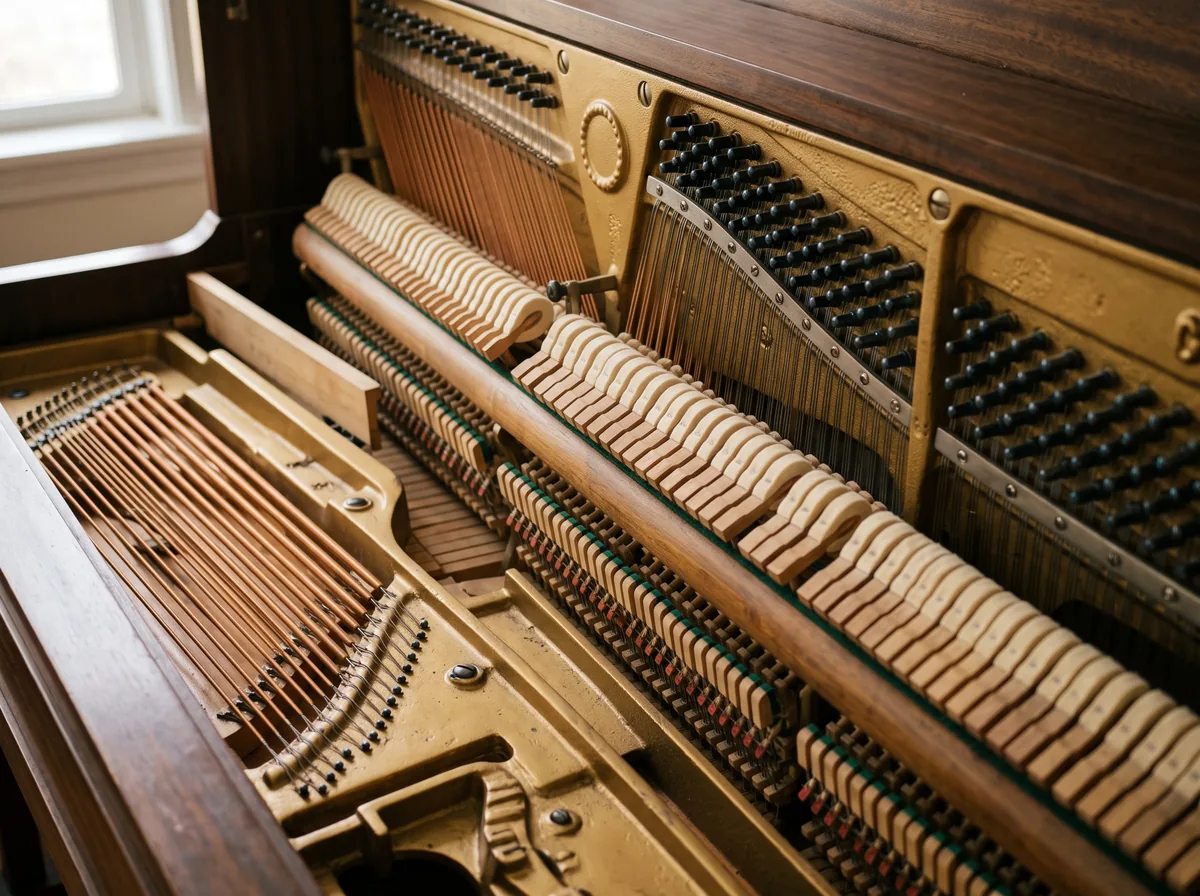
| Hammers and action | Worn hammers rob the piano of nuance | Even, responsive keys, few deep grooves |
| Strings and tuning stability | Rusty or dead strings sound muddy | Bright, even response across the range |
| Cabinet and finish | Reveals storage and humidity history | No swelling, warping, or heavy water marks |
| Overall pitch | A piano far below standard needs extra work | At or near concert pitch already |
Save your money
A low asking price on a neglected Eterna can cost you more than a fair price on a serviced one. Restringing, new hammers, and action regulation add up quickly. Factor any needed work into your budget before you fall for the sticker, and you will usually come out ahead paying a little more for a piano that plays now.
What an Eterna is worth today
Value follows condition, not nostalgia. Because Eterna sat below the flagship line, prices on the used market tend to be friendlier than a comparable Yamaha-badged model of the same age, which is exactly what makes them appealing to a first-time buyer or a growing student. A clean, serviced upright that holds pitch is worth real money. A project piano that needs strings and action work is worth far less, and sometimes less than the cost of fixing it.
Rather than chase a single number, judge each instrument on its merits: how it plays, how stable it is, and what it would cost to bring to its best. If you are weighing an Eterna against other options, our guide to the financial and design benefits of buying a used acoustic piano lays out how to think about the trade-offs before you decide.
Any figures here are general guidance, not an appraisal. Piano values swing widely with condition, age, model, and local demand, and they change over time. For a real number on a specific instrument, arrange an in-person evaluation with a qualified technician or appraiser.
People often ask: is an Eterna a good first piano?
For many families, yes. A serviced Eterna gives a beginner a genuine acoustic action and Yamaha-derived tone without the price of a flagship model. The key is condition. Have any candidate checked so you are buying a piano that will inspire practice, not one that fights the player and needs constant attention.
Keeping an Eterna piano in tune and in shape
This article is for general information only. Piano condition, tuning stability, and care needs vary by instrument, age, and environment. Universal Piano Services is not liable for outcomes from actions taken based on this content. Always consult a qualified piano technician for your specific instrument.
An Eterna rewards steady, unglamorous care. These pianos were built to last, and the ones that still sound wonderful decades on are simply the ones that were looked after. A few habits make all the difference:
- Tune it on a schedule. Twice a year is a sensible baseline for a piano in regular use, and more often in the first year after a move.
- Control the room. Sudden swings in humidity are hard on the soundboard and pinblock. Keep the piano away from heat vents, exterior walls, and direct sun.
- Play it. Regular use keeps the action limber and helps you notice small problems while they are still small.
- Book periodic servicing. Beyond tuning, occasional regulation and voicing keep the touch even and the tone at its best.
- Wipe gently, dust often. A soft, dry cloth on the case and keys is all most days call for. Leave deeper cleaning to a technician.
When a piano needs more than routine care, whether it is fresh strings, hammer work, or a cabinet refresh, that is restoration territory. Our overview of piano restoration and repair explains what is worth doing and when, and staying on top of regular piano tuning is the single best way to protect the instrument you already own.
Pro tip
If you have just moved an Eterna, give it a couple of weeks to settle in the new room before you tune it. The wood and strings need time to adjust to the fresh humidity and temperature, and a tuning done too soon rarely holds.
“Picked up an old Eterna upright for next to nothing, had it serviced, and it plays better than friends’ newer digitals. Once I learned it was basically a Yamaha, the whole thing made sense.”
r/piano owner, 2024
Download the free quick guide
A one-page checklist to confirm the Yamaha connection and judge a used Eterna before you buy.
Frequently Asked Questions
If you are considering an Eterna, or you already own one and want it playing at its best, it helps to have someone who knows the Yamaha family in your corner. Universal Piano Services buys, sells, tunes, and restores quality used pianos for players across Toronto, North York, Vaughan, and the wider GTA. Reach out to our Toronto piano technicians and we will give you a straight read on the instrument in front of you, from lineage to what it needs next.